Introduction
The name Raivata appears sporadically in the Rigveda, yet its significance is far from trivial. Scholars associate Raivata with the wind‑god Vāyu, the divine messenger, and with certain ritual actions performed by priests during the Soma sacrifice. This article surveys the earliest verses that mention Raivata, examines the linguistic context, and explains how the deity fits into the broader Vedic ritual framework.
Earliest Hymns and Linguistic Roots
Raivata is first encountered in Mandala 1, Hymn 165, where the seer Gautama invokes “the swift Raivata who carries the hymn across the heavens.” The root rav‑ (to roar, to move swiftly) links the term to the dynamic aspect of wind. In later books, such as Mandala 10, the epithet re‑appears, suggesting a continuity of worship across generations.
Semantic Connections
Comparative philology shows that Raivata shares cognates with the Avestan raēθa‑ (storm) and the Sanskrit raivata meaning “one who spreads.” These connections reinforce the interpretation of Raivata as a divine force that disperses sacred substances, especially the fragrant smoke of the sacrificial fire.
Ritual Context in the Soma Ceremony
During the Soma rite, priests chant verses that call upon Raivata to “carry the pressed juice to the heavens.” The act of pouring Soma into the fire is metaphorically described as a wind‑borne offering. The hymn emphasizes that without Raivata’s assistance, the divine drink would remain earthbound, limiting its power to reach the gods.
Role of the Hotṛ Priest
The Hotṛ, or chief officiant, invokes Raivata at the precise moment when the Soma is poured onto the altar. This timing aligns with the Vedic principle of “āśirvada” (blessing through breath), wherein the priest’s breath symbolically mirrors the wind’s movement, ensuring the offering’s ascent.
Iconography and Later Interpretations
Although the Rigvedic corpus provides no visual description, later Puranic texts portray Raivata as a youthful figure holding a staff of wind. This iconographic evolution reflects the integration of the early Vedic deity into a more anthropomorphic tradition, merging the abstract force of wind with a personal deity.
Conclusion
Raivata’s appearances in the Rigveda reveal a layered deity who bridges linguistic, ritual, and theological domains. By understanding the early verses and their ritual context, modern readers can appreciate how the ancient sages perceived the invisible forces that animated their sacred ceremonies.
Frequently Asked Questions
What is the primary function of Raivata in the Rigveda?
To act as the divine wind that transports offerings to the heavens.
Which hymn first mentions Raivata?
Mandala 1, Hymn 165.
How is Raivata linked to the Soma ritual?
He is invoked to carry the Soma juice upward during the offering.
What later text gives a visual depiction of Raivata?
Puranic literature.
Test Your Knowledge and Win Coupons to Get Discounts
Have a correction or improvement to suggest?
Log in or create a free accountRelated Videos

packing prasad to everyone who has contributed on srisailam havan.

Jogulamba Temple The Next Havan location 6th of 64

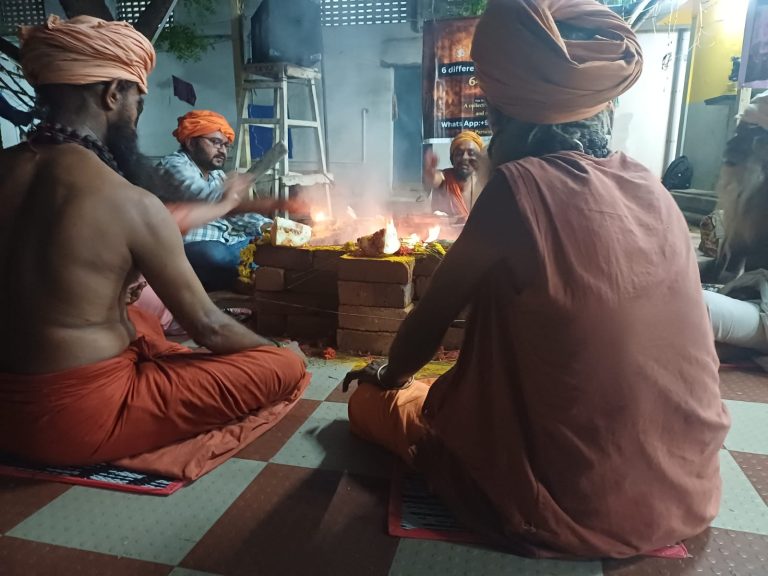
5th Havan of the 64 Shakti Peeth Havan — Srisailam

Fifth havan out of 64 in srisailam.

At India's largest tiger reserve getting ready for our fifth havan. all are welcome

Pvt group initiation into yoni mudra and tantra @mysore.

Kali yantra bags are available

Tantrik workshop with satyama






Leave a Reply