History of the Parama Saṭhita
The Parama Saṭhita emerged during the formative phase of the Pāncarātra Agama corpus, roughly between the 5th and 7th centuries CE. Scholars trace its composition to a circle of senior priests attached to the Venkateswara temple at Tirumala, who sought to codify the most elevated expressions of bhakti and ritual precision.
Origins in the Early Pāncarātra Period
Early references to the text appear in commentaries by the celebrated acharya Jiva Gosvami, who cites it as a source for the supreme mode of worship. The work likely synthesized older Vedic hymns with emergent Tantric motifs, creating a hybrid that appealed to both ritual specialists and philosophic theologians.
Transmission through Gurus and Monastic Lineages
Unlike some Agamas that remained confined to temple archives, the Parama Saṭhita was actively taught in gurukulas. The lineage of Raghunatha Tirtha preserved handwritten manuscripts, while the Vaikhānasa tradition later incorporated selected verses into its own liturgical manuals, ensuring broader dissemination.
Core Teachings and Philosophical Emphasis
At its heart, the Parama Saṭhita declares the supreme reality as Krishna, the source of all emanations. It emphasizes three pillars: pure devotion (bhakti), precise ritual (kriya), and the internalization of divine names (japa).
Devotional Praxis
- Daily chanting of the Hare Krishna mantra, with specific intonations prescribed.
- Offering of tulasi leaves as a symbolic gesture of surrender.
- Participation in the Rasa Lila enactments during festivals.
Theology of the Supreme
The text articulates a non‑dual yet personal view: while all souls are part of the divine essence, the supreme being retains distinct personhood. This nuance differentiates the Parama Saṭhita from more monistic Agamas, offering practitioners a relational pathway to liberation.
Contemporary Significance
Modern Vaishnava communities continue to draw upon the Parama Saṭhita for liturgical guidance. Its verses are recited in diaspora temples, and its philosophical insights inform contemporary discourse on devotional authenticity.
Ritual Use
Temple priests often begin ceremonies with the opening hymn from the Parama Saṭhita, believing it invokes the highest blessing. The text also provides a detailed schedule for seasonal festivals, aligning cosmic cycles with human devotion.
Academic Interest
Recent Sanskrit scholarship has produced critical editions of the manuscript, revealing layers of redaction that illustrate how devotional priorities shifted over centuries. Comparative studies link its themes to the Bhagavata Purana, highlighting a shared vision of divine love.
Frequently Asked Questions
What era does the Parama Saṭhita belong to?
It was composed between the 5th and 7th centuries CE during the early Pāncarātra period.
Which deity is central to the Parama Saṭhita?
Krishna is presented as the supreme deity.
How is the text used in modern temples?
Its opening hymn is recited to invoke blessings and set the tone for rituals.
What distinguishes its theology from more monistic Agamas?
It maintains a personal, relational view of the divine while acknowledging non‑duality.
Test Your Knowledge and Win Coupons to Get Discounts
Have a correction or improvement to suggest?
Log in or create a free accountRelated Videos

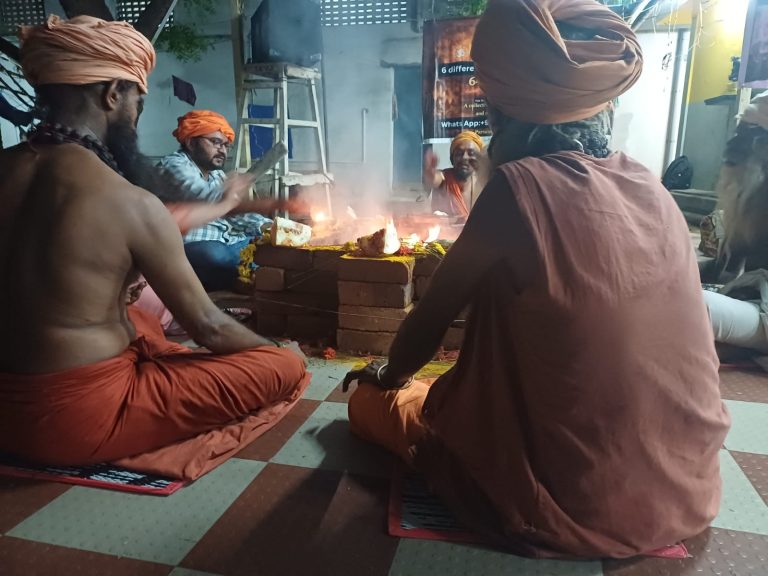
navaratri havan 9 th day ending with poornavathi devi sidhidatri.

Navaratri havan day 8 gauri.

Navaratri havan day 7 devi kalaratri.

6th day navaratri havan devi karthyayini.

Navaratri havan day 5 skandamata.

Navaratri havan day 4 devi kushmanda.

Day 3 havan devi chamdrakanta

Navaratri second day havan in mysore devi brahmacharini








Leave a Reply