Historical Background
Jñānasaṅkalinī Tantra emerged in the early medieval period of India, roughly between the 9th and 12th centuries CE, as part of the broader Nigama corpus of tantric literature. Unlike many ritual‑oriented tantras that focus on external deity worship, Jñānasaṅkalinī emphasizes an internal, knowledge‑based path to liberation. The text is attributed to the sage Jñānasaṅkalin, whose name literally means “the one who gathers knowledge.” Manuscript evidence suggests that the work circulated primarily in the western Himalayan regions, where monastic lineages preserved it alongside other nigama texts such as the Kulacūḍāmaṇi.
Scholars note that the tantra reflects a synthesis of Shaiva, Vaishnava, and non‑sectarian philosophical currents. Its language borrows heavily from the Sanskrit of the Upanishads, while its ritual prescriptions echo the esoteric practices found in the Kula tradition. The historical significance of Jñānasaṅkalinī lies in its role as a bridge between the ritual focus of earlier tantras and the more philosophical orientation of later tantric sādhanā.
Core Teachings
The central doctrine of Jñānasaṅkalinī Tantra is the concept of jñāna‑saṅkalana, the accumulation and integration of true knowledge that dissolves ignorance. This knowledge is not merely intellectual; it is experiential, cultivated through three interrelated practices:
- Mantra meditation that aligns the practitioner’s inner sound with the cosmic syllable Aum.
- Yantra visualization of the eight‑petaled lotus representing the eight siddhis or spiritual powers.
- Ethical refinement called dharma‑sankalpa, which steadies the mind by observing specific vows related to truthfulness, non‑violence, and purity.
Another key teaching is the doctrine of advaitic non‑dualism combined with a subtle dual awareness of Śiva and Śakti as complementary aspects of the same reality. The tantra explains that when the practitioner internalizes this duality, the apparent separation between subject and object disappears, leading to a state of mahā‑samādhi.
Ritual Practices
While Jñānasaṅkalinī is philosophically inclined, it still prescribes a series of rites that support the inner work. The primary ritual is the śravaṇa‑kriya, a nightly recitation of selected verses accompanied by the offering of clarified butter (ghee) into a copper fire. Practitioners also perform the pañca‑maṇḍala puja, arranging five symbolic elements—earth, water, fire, air, and ether—in a mandala to embody the macrocosm within the microcosm of the body.
These rites are meant to purify the subtle channels (nāḍīs) and awaken the dormant kundalini energy at the base of the spine, allowing it to ascend through the chakras in alignment with the teachings of the tantra.
Philosophical Significance
Jñānasaṅkalinī Tantra contributes a nuanced perspective to Indian philosophy by integrating the epistemology of the Nyāya school with the metaphysics of Kashmir Shaivism. It argues that true knowledge arises when the intellect (buddhi) is synchronized with the heart‑mind (caitanya), a synthesis achieved through disciplined practice. This view challenges the binary of rationalism versus mysticism, proposing instead a unified pathway where intellect and intuition co‑operate.
The tantra also addresses the problem of suffering (duḥkha) by asserting that ignorance (avidyā) is the root cause. By accumulating jñāna‑saṅkalana, the practitioner systematically dismantles the layers of ignorance, ultimately attaining liberation (mokṣa) without renouncing worldly responsibilities.
Contemporary Relevance
In modern times, Jñānasaṅkalinī Tantra has found resonance among scholars, yoga practitioners, and seekers of holistic spirituality. Its emphasis on inner knowledge aligns with contemporary mindfulness movements, while its ritual framework offers a structured approach for those interested in traditional tantric sādhanā. Several lineages in Nepal and northern India have begun publishing commentaries and translation projects, making the text accessible to English‑speaking audiences.
Moreover, the tantra’s ethical emphasis on truthfulness and non‑violence speaks directly to current global conversations about sustainable living and compassionate action. By integrating its teachings, modern practitioners can cultivate a balanced life that honors both inner transformation and external responsibility.
Frequently Asked Questions
When was Jñānasaṅkalinī Tantra likely composed?
Between the 9th and 12th centuries CE.
What is the primary goal of the jñāna‑saṅkalana practice?
To dissolve ignorance through the accumulation of true knowledge.
Which two deities are emphasized as complementary in the tantra?
Śiva and Śakti.
What is the nightly ritual called that involves reciting verses?
Śravaṇa‑kriya.
Test Your Knowledge and Win Coupons to Get Discounts
Have a correction or improvement to suggest?
Log in or create a free accountRelated Videos

Spiritual adventure to connect with instructor and get exclusive discount visit www.arunsyoga.in

navaratri havan 9 th day ending with poornavathi devi sidhidatri.

Navaratri havan day 8 gauri.
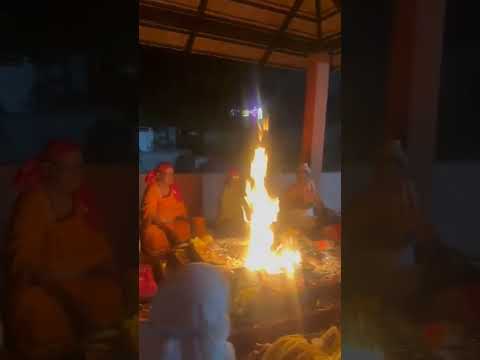
Navaratri havan day 7 devi kalaratri.

6th day navaratri havan devi karthyayini.

Navaratri havan day 5 skandamata.

Navaratri havan day 4 devi kushmanda.

Day 3 havan devi chamdrakanta









Leave a Reply