Who Was Yajnavalkya?
Yajnavalkya is a central figure in the Vedic and post‑Vedic world, celebrated for his deep philosophical insight and his role as a teacher of the highest order. Although traditionally catalogued as a rishi rather than a deity, many later texts elevate his status, portraying him as a bridge between mortal ritual and divine wisdom.
Early Life and Lineage
Born into the Brahmarshi family, Yajnavalkya was the son of the sage Shukra and a descendant of the great sage Bhrigu. Ancient genealogies place him in the same lineage that produced the most revered priests of the Vedic fire‑sacrifices, giving him both ritual authority and scholarly gravitas.
Education and Mastery of the Vedas
From a young age he mastered the Rigveda, Yajurveda, and the intricate art of yajna (sacrificial rites). This mastery allowed him to critique and reform ritual practice, insisting that the inner intention of the sacrificer mattered as much as the external fire.
The Upanishadic Dialogues
The most famous record of Yajnavalkya’s teachings appears in the Mundaka and Katha Upanishads. In the Mundaka Upanishad he famously declares:
“There is that which is higher than the heavens, beyond the sun, beyond the moon, beyond the stars—this is Brahman, the eternal, unchanging reality.”
His dialogues with students such as Pañcasikha reveal a method of questioning that pushes the disciple beyond intellectual knowledge toward direct realization.
Key Themes in His Teachings
- The unity of the self (Atman) with the absolute (Brahman).
- The inadequacy of ritual without inner purity.
- The path of knowledge (jnana) as a means to liberation.
Impact on Yoga and Meditation
Later yogic texts credit Yajnavalkya with articulating the eight‑limb path that would become the backbone of classical yoga. His emphasis on breath control (pranayama) and concentration (dharana) laid a practical foundation for the more abstract metaphysics of the Upanishads.
Ritual Reforms
In his famous debate with King Janaka, Yajnavalkya argued that a true sacrifice is not merely the offering of material goods, but the surrender of ego and the cultivation of compassion. This perspective reshaped the way Vedic priests performed the agni rites, integrating ethical intent with ceremonial precision.
Modern Relevance
Today, Yajnavalkya’s dialogues are studied in universities, spiritual centers, and yoga studios worldwide. His method of probing questions—often called the “Yajnavalkya technique”—helps students dismantle preconceived notions and approach truth directly.
Whether you are a scholar of ancient Indian literature, a practitioner of yoga, or simply curious about the roots of philosophical inquiry, Yajnavalkya offers a timeless model of how intellect and devotion can converge.
Conclusion
Yajnavalkya stands as a luminous example of a sage whose teachings transcend the ritualistic framework of his time, pointing instead to an inner reality that underlies all existence. His legacy continues to inspire seekers who wish to move beyond the outer forms of worship toward the inner light of knowledge.
Frequently Asked Questions
What is Yajnavalkya best known for in the Upanishads?
His dialogues on the nature of Brahman and Atman.
Which Upanishad contains Yajnavalkya's famous declaration about the higher reality?
Mundaka Upanishad
How did Yajnavalkya influence the practice of yoga?
He emphasized breath control and concentration as essential steps.
What was Yajnavalkya's stance on ritual sacrifice?
He taught that inner intention outweighs external offerings.
Test Your Knowledge and Win Coupons to Get Discounts
Have a correction or improvement to suggest?
Log in or create a free accountRelated Videos

I Performed The Japanese *Hitori Kakurenbo* Ritual at 3:33 am 💀 *Ghost caught on camera* 😰

Gyan yoga is the path of achieving liberation through resonating.

Vedic Reading Series Episode No.15: 'The Politics of Naked Yoga For Men'
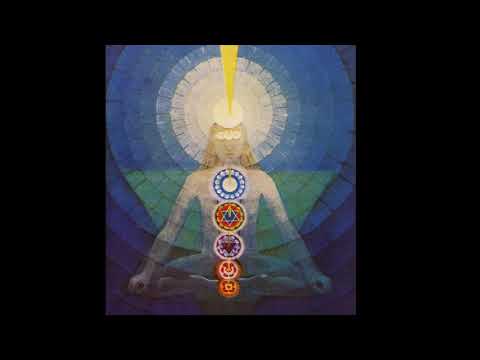
Kundalini Yoga – How It Helps Us To See Reality

Sacrificing animals are not a blood bounded ritual rather it is devotion.

Dream yoga from Budhism helps you to reach the fourth.

Dream yoga can helps you to be more awoke.

What A Birth Chart Can Reveal To You In Vedic Astrology




Leave a Reply