What Is Tanunapat?
Tanunapat is the Vedic personification of the ritual fire that sustains the sacrificial altar. Unlike Agni, who represents the cosmic fire of transformation, Tanunapat is the specific fire that burns on the ground during a yajña, acting as the conduit between the devotee and the divine.
Origin in the Vedas
The term appears in the Rigveda and later in the Brahmanas, where priests invoke Tanunapat to keep the offering pure. The name combines “tanu” (body) and “nap” (to burn), suggesting a fire that inhabits the body of the altar.
Symbolic Role
Tanunapat embodies the physical manifestation of sacrifice. It is said to carry the prayers of the worshiper upward, while simultaneously grounding the divine presence on Earth. This duality links it to both Agni and the material world.
Ritual Practices Involving Tanunapat
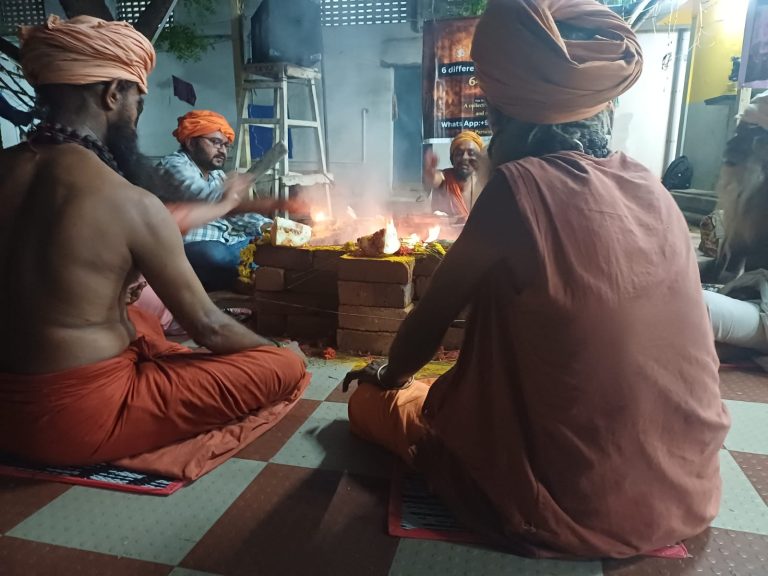
In a typical soma or cattle sacrifice, the priest lights the Tanunapat using a spark from an existing fire, then continuously tends it throughout the ceremony. The fire must never be allowed to die, as its extinction is interpreted as a loss of divine favor.
- Lighting: A sacred twig (often from a specific tree) is used to catch the first spark.
- Feeding: Ghee, grains, and herbs are offered at regular intervals.
- Extinguishing: The fire is only doused after the final mantra is recited, marking the completion of the rite.
Tanunapat and Modern Worship
Although the Vedic fire rites are rare today, many contemporary Hindu festivals retain the essence of Tanunapat. The hearth fire during Diwali, the agnihotra practice, and the fire altar in some yoga traditions echo the ancient principle of a dedicated, ritualized flame.
Scholars also compare Tanunapat to the concept of “inner fire” in yoga, where the practitioner cultivates a spiritual heat that purifies the mind. This parallel shows how the ancient deity continues to inspire modern spiritual pathways.
Key Differences Between Tanunapat and Agni
While both are fire deities, Agni is a universal principle governing all fire, including hearth, lightning, and the sun. Tanunapat, by contrast, is limited to the sacrificial fire of a specific rite. This distinction is crucial for priests who must address each deity correctly in the liturgy.
Understanding these nuances helps practitioners perform the rituals with proper reverence, ensuring that the intended divine energies are correctly invoked.
Philosophical Interpretations
Philosophers such as Yajnavalkya interpret Tanunapat as the “microcosmic fire” that mirrors the macrocosmic Agni. In this view, the altar becomes a miniature universe where the flame represents the soul’s journey toward enlightenment.
Later Upanishadic texts use the fire metaphor to discuss the inner self, suggesting that the external Tanunapat is a teaching tool for inner transformation.
Frequently Asked Questions
What is the primary function of Tanunapat in Vedic rituals?
It serves as the sacrificial fire that carries offerings to the gods.
How does Tanunapat differ from Agni?
Tanunapat is the specific ritual fire of a yajña, while Agni represents fire in all forms.
Which Vedic text first mentions Tanunapat?
The Rigveda.
Can modern festivals incorporate Tanunapat?
Yes, many festivals retain a ritual fire that echoes Tanunapat’s role.
Test Your Knowledge and Win Coupons to Get Discounts
Have a correction or improvement to suggest?
Log in or create a free accountRelated Videos

packing prasad to everyone who has contributed on srisailam havan.

Jogulamba Temple The Next Havan location 6th of 64

5th Havan of the 64 Shakti Peeth Havan — Srisailam

Fifth havan out of 64 in srisailam.

At India's largest tiger reserve getting ready for our fifth havan. all are welcome

Pvt group initiation into yoni mudra and tantra @mysore.

Kali yantra bags are available

Tantrik workshop with satyama







Leave a Reply