 ARUN'S YOGA
Understanding Verse 119
In Verse 119 of the Yogacūḍāmaṇi Upaniṣad, we delve into the practice of breath regulation as a pathway to spiritual accomplishment. The verse emphasizes the significance of exhaling, inhaling, and retaining breath in a gradual and appropriate manner. This methodology is not merely physical but is intricately linked to attaining a deeper level of mastery and accomplishment in yoga.
The Essence of Breath Control
The act of breathing is more than a biological function; it is a vital aspect of yoga and meditation. Proper breath control, also known as prāṇāyāma, forms the foundation of many yogic practices. In this context, exhaling is imperative for releasing tension and impurities from the body, while inhaling serves to bring in fresh prāṇa, or life force.
According to the teachings, one should approach these breathing exercises with mindfulness. Gradual exhalation allows the practitioner to let go of stress and distractions, fostering a state of calm. Inhaling, when done appropriately, helps in filling the body with positive energy. Retaining the breath—known as kumbhaka—provides an opportunity for stillness, allowing the prāṇa to circulate and nourish the entire being.
Practising Gradual Control
To truly benefit from prāṇāyāma, it is essential to adopt a structured approach. Beginners are often advised to start with a simple rhythm—equal length for exhale and inhale. For instance, one might exhale for a count of four, inhale for a count of four, and retain the breath for a count of four. This creates a soothing cycle that balances the body’s energies.
As one progresses, the duration of each phase can be extended. Mastering this gradual process aids in developing greater lung capacity and promotes tranquility in the mind. It is important to listen to the body’s cues during practice, ensuring that one does not strain or force any part of the breathing process.
The Role of Intention and Awareness
The journey through breath control is also about cultivating intention and awareness. Practitioners are encouraged to maintain a focus on their breath while observing the sensations that arise in the body. This level of awareness can turn a mechanical exercise into a meditative experience.
Furthermore, as one becomes more adept at managing breath, it opens up pathways for deeper meditation. The state of calm achieved through regulated breathing allows for greater concentration and enhances the ability to meditate effectively.
Attaining Accomplishment
The final part of Verse 119 underscores the outcome of these practices—accomplishment. By consistently applying this principle of controlled breathing, practitioners can achieve significant milestones in their yogic journey. The benefits are multifaceted, including enhanced physical health, mental clarity, and spiritual awakening.
In conclusion, Verse 119 serves as a reminder of the profound impact of breath on our overall well-being. As one exhales, inhales, and retains their breath with intention, they move closer to the realization of their true potential in the practice of yoga. This mastery of breath is not just a technique but a gateway to deeper spiritual understanding and accomplishment.
Frequently Asked Questions
What is the focus of Verse 119 in the Yogacūḍāmaṇi Upaniṣad?
Verse 119 focuses on the practice of breath regulation, emphasizing the importance of exhaling, inhaling, and retaining breath gradually and appropriately to attain spiritual accomplishment.
How does breath control relate to yoga and meditation?
Breath control, or prāṇāyāma, is foundational in yoga and meditation, as it helps release tension and bring in vital energy, facilitating a deeper meditative experience.
What is the recommended starting point for breath control practice?
Beginners are advised to start with a simple rhythm of equal lengths for exhale, inhale, and breath retention, such as four counts for each phase.
What outcomes can practicing proper breath control lead to?
Practicing proper breath control can lead to enhanced physical health, mental clarity, and spiritual awakening.
What aspect of practice does the article emphasize alongside breath regulation?
The article emphasizes the importance of intention and awareness in breath regulation to transform the practice into a meditative experience.
Related reading
- Verse 69 – Diseases such as consumption, leprosy, disorders of the anus, abdominal tumours and indigestion are destroyed in one who practises Mahāmudrā.- क्षयकुष्ठगुदावर्तगुल्माजीर्णपुरोगमाः । तस्य रोगाः क्षयं यान्ति महामुद्रां तु योऽभ्यसेत् ॥ ६९ ॥
- Verse 2 – Āsana (posture), restraint of Prāṇa, Pratyāhāra (withdrawal of the senses), Dhāraṇā (concentration), Dhyāna (meditation), and Samādhi (absorption)—these are declared to be the six limbs of Yoga.- आसनं प्राणसंरोधः प्रत्याहारश्च धारणा । ध्यानं समाधिरेतानि योगाङ्गानि भवन्ति षट् ॥ २ ॥
- Verse 8 – In its middle is the Yoni, revered by the Siddhas and known as Kāmākhyā. Within it is situated the great Liṅga, facing westward.- तन्मध्ये प्रोच्यते योनिः कामाख्या सिद्धवन्दिता । तस्य मध्ये महालिङ्गं पश्चिमाभिमुखं स्थितम् ॥ ८ ॥
Test Your Knowledge and Win Coupons to Get Discounts
Have a correction or improvement to suggest?
Log in or create a free accountRelated Videos
 It is really difficult for my clients to achieve conscious breath work.
 Prana is the vital force that enables dance of eternity.
 Kundalini Yoga Level 1 - A Simple Meditation Technique To Transmute Your Sexuality Into Creativity
 why releasing body tension makes you cry
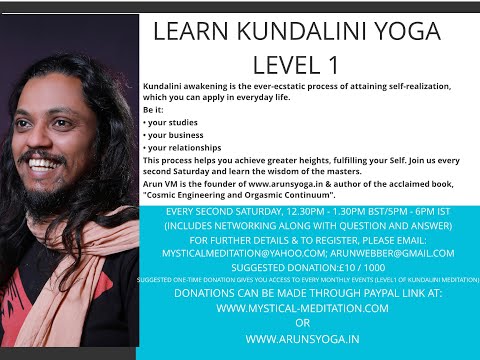 Online Kundalini Yoga Learning Session Level 1 For Beginners
 To experience pleasure we don't have to be in body consciousness.
 The amount of prana differs from matter to matter.
 Yoga is the state of mind in which you merged with the absolute.









Leave a Reply