 ARUN'S YOGA
 ARUNSYOGA
The worship of the Lord, according to this verse, means dedicating every action to the Divine. By offering all deeds as service, one aligns with the chief view of the knowers of Reality.
Conceptual Meaning of इश्वराराधनं
In the Sanskrit phrase ईश्वराराधनं यत्तत्सर्वकर्मसमर्पणम्, the term ईश्वराराधनं denotes devotion to the Supreme, while यत्तत्सर्वकर्मसमर्पणम् expands that devotion to include every thought, speech, and deed. The verse teaches that true worship is not limited to ritual prayer; it is a continuous surrender of the entire spectrum of human activity.
Upanishadic Context
This teaching belongs to the Darśana Upanishad, a text that systematically presents the philosophical foundations of Yoga, ethics, and metaphysics. Within the Upanishad, the verse follows a series of vows such as austerity, faith, and charity, positioning worship as the pinnacle of spiritual discipline. The sages (तत्त्वविदाः) assert that when all actions become offerings, the practitioner experiences the non‑dual reality where the individual self merges with the universal Self.
Relationship to Other Vows
Earlier verses highlighted दानं (charity) and आस्तिक्यं (faith) as essential. Worship that includes every action naturally incorporates these virtues: giving becomes an offering, and faith manifests in the constant remembrance of the Divine. Thus, इश्वराराधनम् synthesises the preceding vows, creating a holistic path where ethical conduct, study, and meditation converge.
Practical Implementation
To embody this principle in daily life, one can adopt concrete practices that turn routine activities into acts of devotion.
- Begin each task with a silent affirmation, such as “May this action serve the Divine.”
- Maintain mindfulness during work, recognizing the body, mind, and speech as instruments of worship.
- Convert challenges into opportunities for surrender, viewing obstacles as the Lord’s guidance.
- End the day with a gratitude ritual, offering the day’s outcomes back to the Supreme.
Spiritual Benefits
When every action is offered, the practitioner experiences a gradual dissolution of egoic boundaries. This results in inner peace, clarity of purpose, and a deep sense of unity with all existence. Moreover, the mind becomes steadier, making meditation (ध्यान) more effortless and leading to higher states of consciousness described in the Upanishad.
Conclusion
Thus, the chief view of the knowers of Reality is that worship of the Lord is not a separate, occasional activity but the continuous offering of all actions. By internalising this teaching, seekers align their lives with the timeless wisdom of the Darśana Upanishad, moving steadily toward the realization of the ultimate, non‑dual truth.
Frequently Asked Questions
What does इश्वराराधनं signify in the verse?
It denotes devotion to the Supreme by offering every thought, speech, and deed as worship.
Which Upanishad contains the teaching about offering all actions?
The teaching is found in the Darśana Upanishad.
How does the article suggest one can turn daily tasks into worship?
Begin each task with a silent affirmation, stay mindful of body, mind and speech, and end the day with a gratitude ritual.
What spiritual benefits arise from offering all actions to the Divine?
It leads to dissolution of egoic boundaries, inner peace, clarity of purpose and steadier meditation.
Which earlier vows are mentioned as preceding the worship vow?
The earlier vows highlighted are दानं (charity) and आस्तिक्यं (faith).
Test Your Knowledge and Win Coupons to Get Discounts
Have a correction or improvement to suggest?
Log in or create a free accountRelated Videos
 Worship in oriental concept is extremely diffrent from Semitic religions. Example Ram Mandir ayodhya
 Asuras are not daemons they are not scared of gods rather they worship gods.
 Giving offering to serpent energies on naga panchami. #nakshatravanam
 Sacrificing animals are not a blood bounded ritual rather it is devotion.
 Shadow work helps us to clear our thought and action so that we can approach something beyond.
 If u think then you are thinking about the thought.Not about the reality.
 To experience reality we need to change the pattern of thought. Please learn to unlearn.
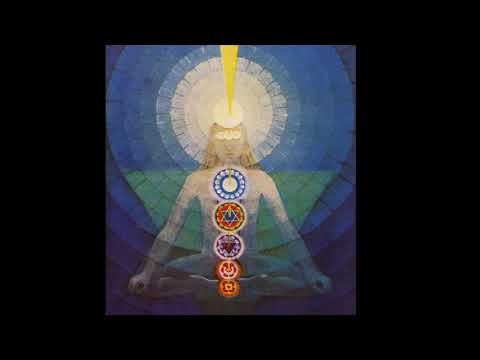 Kundalini Yoga - How It Helps Us To See Reality









Leave a Reply