Introduction to Bhairava and the 64 Yoginis
In the complex and intriguing world of Tantric traditions, the figures of Bhairava and the 64 Yoginis hold significant importance. Bhairava, a fierce manifestation of Shiva, and the Yoginis, powerful female deities, are central to various tantric practices and mythologies. This article delves into the relationship between Bhairava and the 64 Yoginis, exploring their roles, mythological narratives, and the significance of their union in tantric rituals and philosophy.
Mythological Background
According to mythological texts, Bhairava is often depicted as a fierce form of Shiva, associated with destruction and the protection of the universe. The 64 Yoginis, on the other hand, are a group of female deities, each embodying a particular aspect of the divine feminine. Their origins and roles vary across different tantric traditions, but they are generally revered for their power to bestow spiritual growth, protection, and liberation upon seekers.
The Significance of Bhairava and the Yoginis
The union of Bhairava with the 64 Yoginis symbolizes the balance of masculine and feminine energies, a central theme in tantric philosophy. This balance is crucial for achieving spiritual enlightenment and harnessing the full potential of the universe. Through their union, Bhairava and the Yoginis embody the completeness of the divine, manifesting the potential for liberation and self-realization.
Tantric Practices and Rituals
Tantric practitioners often invoke Bhairava and the Yoginis in rituals and meditations, seeking to connect with their divine energies. These practices are designed to awaken the practitioner’s inner potential, facilitate spiritual growth, and ultimately achieve union with the divine. The specifics of these practices vary widely among different tantric traditions, but they commonly involve the use of mantras, yantras, and ritualistic offerings to summon and honor the deities.
Importance of the Yogini Cult
The cult of the Yoginis has played a significant role in the development of tantric thought and practice. The Yoginis are often associated with magical powers and the ability to confer supernatural abilities upon their devotees. Their worship is characterized by a deep reverence for the feminine principle and the recognition of the feminine as a powerful and indispensable aspect of the divine.
In tantric traditions, the union of Bhairava and the Yoginis is not merely symbolic but is believed to have practical implications for spiritual seekers. It represents the integration of opposites—masculine and feminine, active and passive, creation and destruction—into a unified whole. This integration is seen as essential for transcending duality and achieving a state of unity or monism, which is the ultimate goal of many tantric practices.
Conclusion
The relationship between Bhairava and the 64 Yoginis is a fascinating and complex aspect of tantric traditions. Through their union, these deities embody the principles of balance, unity, and the transcendence of duality. For those interested in exploring the depths of tantric philosophy and practice, understanding the roles and significance of Bhairava and the Yoginis can be particularly enlightening, offering insights into the nature of the divine and the path to spiritual liberation.
- The cult of the Yoginis emphasizes the importance of the feminine principle in spiritual growth and enlightenment.
- Bhairava, as a manifestation of Shiva, represents the active, masculine aspect of the divine.
- The balance of masculine and feminine energies is crucial in tantric philosophy for achieving spiritual growth and liberation.
Frequently Asked Questions
Who are the 64 Yoginis?
The 64 Yoginis are a group of female deities in Hindu mythology, each representing a particular aspect of the divine feminine.
What is the significance of Bhairava in Tantric traditions?
Bhairava, a fierce form of Shiva, is significant in Tantric traditions for his role in protection and the balance of masculine energies.
How do Bhairava and the Yoginis relate to each other?
Bhairava and the Yoginis are related through their symbolic union, which represents the balance of masculine and feminine energies, crucial for spiritual growth and enlightenment in tantric philosophy.
Test Your Knowledge and Win Coupons to Get Discounts
Related Products & Services
Its her (Paper back) Signed By Arun
Exploring the Tantric Path" is a comprehensive guide that delves into the sacred teachings of Tantra through the exploration of…
₹299
Order on WhatsApp
Tantrik yoga retreat with satyama.
Imagine a week where grand life lessons in love, spirituality and your sexuality can happen every day with a small…
€2,000
Connect on whatsapp
Read your chart With Arun
Read your birth chart alongside a tarot reading to identify the energetic blocks behind the challenges you are facing. Then,…
₹5,000
Order on WhatsApp
Learn yoni mudra Meditation With Arun.(Private , Group Online and Offline )
The Yoni Mudra is a powerful hand gesture that, when combined with specific breathing and mantras, can immediately generate high-frequency…
₹1,250
Order on WhatsApp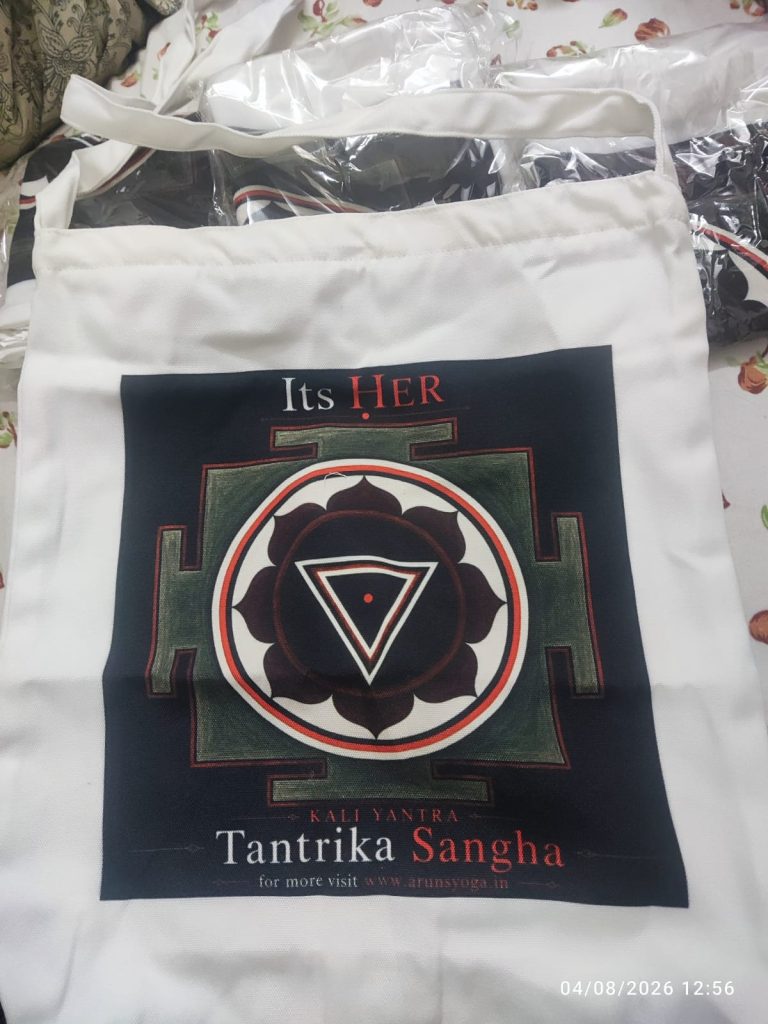
Kali Yantra Side Bags For Sangha By Arun
Carry your essentials with the protective presence of the Kali Yantra. Designed for spiritual practitioners and seekers, this side bag…
₹699
Order on WhatsApp
Earrings with feathers of guacamayo
Beautiful handcrafted earrings made with authentic guacamayo (Amazon parrot) feathers and natural wooden beads. Created using only natural materials. Inspired…
€40
Order on WhatsApp
🌿 Private and Group Hatha, Vinyasa & Yoga Nidra Sessions with Lyubov
🔱Hatha, vinyasa yoga 🔱Yoga nidra 🌿What it will give?: ballance, inner peace, mindfulness, emotional release, relaxation, flexibility, strength, improve the…
₹0
Connect on whatsapp
Astrology and NLP with kavya.
At Kaviya Devendhiran – NLP Master Practitioner & Life Coach, we help individuals create positive and lasting transformation by changing…
₹500
Connect on whatsapp
Private & Group Tantrik Havan
Conduct private and group Tantrik havans to increase and channelise energy in your own property, ashram, or spiritual centre.
₹50,000
Contact TodayMost Viewed Products And Services
Learn yoni mudra Meditation With Arun.(Private , Group Online and Offline )
The Yoni Mudra is a powerful hand gesture that, when combined with specific breathing and mantras, can immediately generate high-frequency…
₹1,250
Order on WhatsApp
🌿 Private and Group Hatha, Vinyasa & Yoga Nidra Sessions with Lyubov
🔱Hatha, vinyasa yoga 🔱Yoga nidra 🌿What it will give?: ballance, inner peace, mindfulness, emotional release, relaxation, flexibility, strength, improve the…
₹0
Connect on whatsapp
Kali Yantra Side Bags For Sangha By Arun
Carry your essentials with the protective presence of the Kali Yantra. Designed for spiritual practitioners and seekers, this side bag…
₹699
Order on WhatsAppHave a correction or improvement to suggest?
Log in or create a free accountRelated Videos

Is Tantric practices involves male and female??

Bhairava current of nepal

The cult of yoginis- A discussion with nilanjana And her books about yoginis.

My New Year message and the importance of shakthi and yoginis in coming years. #shakthi #yogini

Creating a #space for #tantric practices are #essential. #shorts

In search of yoginis in nepal

Tibetan book of death and the yoginis Recoganisation of states while dying

The Esoterism Of Tantric Enlightenment In World Religions – Vedic Reading Series Episode No. 5


Leave a Reply