Understanding Rta in Vedic Thought
Rta (often transliterated as ṛta) is the principle that governs the natural and moral order of the universe in early Vedic literature. It is more than a concept; the Vedas present it as a living force that upholds truth, regularity, and the seamless functioning of all phenomena.
The Origin of Rta
The word appears in the oldest hymns of the Rigveda, where poets invoke Rta to describe the reliable rhythm of seasons, the predictable movement of stars, and the ethical balance required of humans. Scholars interpret these verses as an early attempt to articulate a universal law that binds the cosmos.
Rta as a Personified Deity
While Rta is fundamentally an abstract principle, later Vedic texts personify it as a deity who watches over the world. In the Yajurveda and the Atharvaveda, Rta is depicted as a divine judge who rewards adherence to truth and punishes disruption of order. This personification allows worshippers to appeal directly to the cosmic law through ritual.
Rta’s Role in Ritual and Ethics
Rituals (yajña) were designed to align human action with Rta. By offering precise chants, fire, and sacrificial items, priests sought to reinforce the cosmic rhythm. Ethically, the concept demanded honesty, hospitality, and respect for all life, because any breach threatened the stability of the universe.
Comparisons with Other Cosmic Principles
Rta bears resemblance to concepts such as Ma’at in ancient Egypt and Dao in Chinese philosophy, yet its Vedic framing is uniquely tied to a pantheon of gods and the ritual fire.
- Rta governs natural phenomena: day‑night cycles, seasons, and celestial motions.
- Rta guides moral conduct: truth‑telling, fairness, and hospitality.
- Rta is invoked in major Vedic sacrifices to maintain harmony.
- Later Hindu thought integrates Rta into the broader idea of Dharma.
Understanding Rta helps modern readers see how ancient Indians conceptualized a universe that was both orderly and morally charged. The principle continues to influence contemporary discussions on environmental ethics and universal law.
Frequently Asked Questions
What does Rta represent in the Rigveda?
The natural and moral order of the universe.
How is Rta personified in later Vedic texts?
As a divine judge who rewards truth and punishes disorder.
Which later Hindu concept incorporates Rta?
Dharma
Which non‑Indian philosophy has a similar concept to Rta?
Ma’at
Test Your Knowledge and Win Coupons to Get Discounts
Have a correction or improvement to suggest?
Log in or create a free accountRelated Videos

Sanathana dharma is the dharma that exist not the one that imposed.

Vedic reading series episode no -24 Philosophy of LGBTQIA

The Universe.

Understanding a deity.
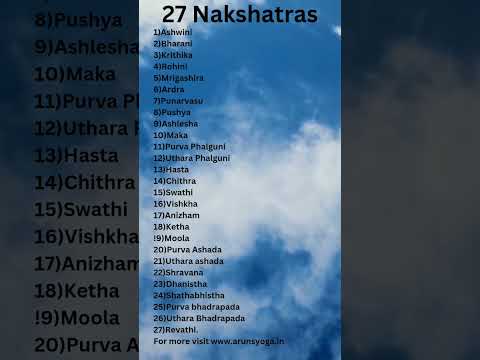
#146 All 27 Nakshatras in order.

Differences between vedic astrology and tarot card reading.

This is why Yantras are the secret gateway to mysteries of universe.

Vedic reading Series episode no 23 Looking in to the past life with candice.







Leave a Reply