Historical Background
The Devīyāmala Tantra occupies a unique place among the Nigama scriptures. Scholars date its composition to the late first millennium CE, roughly between the 9th and 11th centuries, a period marked by the flourishing of tantric literature in eastern India. Unlike the more widely known Śakti‑based tantras, Devīyāmala focuses on the goddess Devī as the embodiment of the ultimate reality, integrating Vedic ritual with esoteric meditation.
Manuscript Tradition
Surviving manuscripts are scattered across libraries in Pune, Kolkata, and the British Museum. These codices share a common structure of 12 chapters, each dealing with a specific aspect of divine worship, cosmology, and yogic practice. Comparative analysis suggests that the text drew from earlier Agamic sources while introducing novel iconographic formulas.
Core Teachings
At its heart, the Devīyāmala Tantra presents a vision of reality where the feminine principle pervades all levels of existence. The text outlines a three‑fold path: śravaṇa (listening), manana (contemplation), and nididhyāsana (deep meditation). Practitioners are instructed to chant the sacred mantra Om Devi Namah while visualizing the goddess seated on a lotus of five petals, each petal representing an element.
Divine Feminine and the Five Elements
The tantra links the goddess to earth, water, fire, air, and ether, emphasizing that mastery over these elements leads to inner equilibrium. It also describes six yogic techniques—prāṇāyāma, dhāraṇā, dhyāna, tāraṇa, samādhi, and pūraka—each aimed at awakening the latent Shakti within the practitioner.
Ritual Practices and Textual Features
Rituals prescribed in the Devīyāmala Tantra are both elaborate and accessible. A typical puja involves:
- Purification with sacred water (snāna) and ash (bhasma).
- Installation of a golden Devī yantra on a sandalwood platform.
- Recitation of the 108‑name mantra cycle, accompanied by cymbal beats.
- Offering of five fruits, each symbolizing an element.
Beyond ritual, the text includes philosophical discourses that echo Advaita Vedānta, asserting that the individual self (ātman) is not separate from Devī herself.
Contemporary Significance
Modern practitioners find the Devīyāmala Tantra valuable for its balanced approach to devotion and self‑realization. Yoga studios incorporating tantric philosophy often draw upon its meditation techniques, while scholars cite it as evidence of the fluid exchange between Vedic and tantric streams.
Why It Matters Today
In an age of fragmented spiritual practices, the tantra’s emphasis on the divine feminine offers a holistic framework for integrating body, mind, and spirit. Its teachings inspire contemporary art, music, and even ecological movements that honor the earth as a manifestation of the goddess.
Frequently Asked Questions
When was the Devīyāmala Tantra likely composed?
Between the 9th and 11th centuries CE.
What is the primary mantra highlighted in the Devīyāmala Tantra?
Om Devi Namah.
Which element is NOT explicitly linked to the goddess in the tantra?
Metal.
How many chapters does the traditional text contain?
Twelve.
What three‑fold path does the tantra prescribe?
Śravaṇa, mantra, and nididhyāsana.
Test Your Knowledge and Win Coupons to Get Discounts
Have a correction or improvement to suggest?
Log in or create a free accountRelated Videos

Spiritual adventure to connect with instructor and get exclusive discount visit www.arunsyoga.in

navaratri havan 9 th day ending with poornavathi devi sidhidatri.

Navaratri havan day 8 gauri.
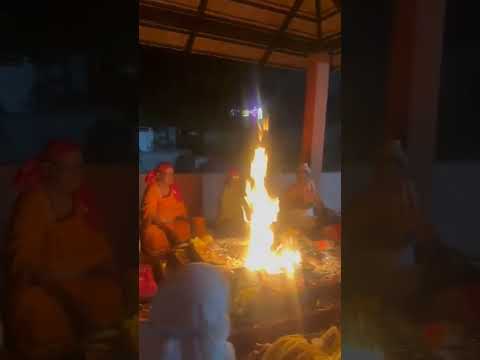
Navaratri havan day 7 devi kalaratri.

6th day navaratri havan devi karthyayini.

Navaratri havan day 5 skandamata.

Navaratri havan day 4 devi kushmanda.

Day 3 havan devi chamdrakanta









Leave a Reply