Understanding the Essential Practices
In the profound world of Yoga, certain practices stand out as vital for achieving spiritual progress and awakening the latent powers within us. Among these, two practices are emphasized in the ancient scriptures: the movement of Sarasvatī and the restraint of breath. This article delves into these essential practices and their significance in the journey of awakening Kuṇḍalinī.
The Movement of Sarasvatī
Sarasvatī represents knowledge, wisdom, and the flow of consciousness. Her movement signifies the dynamic aspect of learning and spiritual development. In yogic tradition, understanding and harnessing the flow of Sarasvatī enables practitioners to create a conducive environment for their spiritual journey. It is essential to cultivate an awareness of this flow within oneself, allowing it to guide one’s practices and meditative states.
Practicing the movement of Sarasvatī involves several techniques, such as visualization and sound. Chanting specific mantras associated with Sarasvatī can invoke her energy, helping to enhance one’s learning and increase clarity of thought. Focusing on her representation connects practitioners to deeper levels of understanding beyond the physical realm.
Breath Restraint (Prāṇarodha)
In conjunction with the movement of Sarasvatī, breath restraint or prāṇarodha forms the second pillar of these practices. Breath is often viewed as the bridge between the body and the mind, and controlling it allows greater mastery over one’s inner state. Prāṇarodha involves techniques that slow down and regulate the breath, such as pranayama, which is crucial in achieving a deeper level of meditation.
Through consistent practice of breath control, practitioners can enhance their concentration, purify their prāṇic energy, and create a tranquil state of mind. This tranquility is essential for the awakening of Kuṇḍalinī, as a serene mind fosters an environment for spiritual experiences to unfold.
The Awakening of Kuṇḍalinī
As both Sarasvatī’s movement and the restraint of breath come together in practice, they facilitate the awakening of Kuṇḍalinī. The ultimate goal of such practices is to straighten the Kuṇḍalinī energy, allowing it to rise through the chakras, leading to self-realization and spiritual enlightenment. It is believed that a well-guided practice can align the energies and lead to profound experiences of unity and bliss.
For many practitioners, striving for this balance between movement and restraint can be transformative. Regular practice of these techniques not only enhances one’s spiritual progress but also fosters emotional stability and resilience in daily life. As one becomes more aware of both the movement of knowledge and the control of breath, a greater understanding of oneself and the surrounding universe emerges.
Conclusion
In conclusion, the practices of Sarasvatī’s movement and breath restraint are cornerstones in the path towards the awakening of Kuṇḍalinī. These elements emphasize the importance of blending knowledge with practice, fostering an environment ripe for spiritual growth. As practitioners engage with these teachings, the promise of a straightened Kuṇḍalinī appears more tangible, guiding them toward ultimate truth and liberation.
Frequently Asked Questions
What does the movement of Sarasvatī represent in yoga?
The movement of Sarasvatī symbolizes knowledge, wisdom, and the flow of consciousness.
How does breath restraint contribute to spiritual awakening?
Breath restraint, or prāṇarodha, calms the mind and purifies energy, creating an ideal state for Kuṇḍalinī to awaken.
What is the ultimate goal of awakening Kuṇḍalinī?
The ultimate goal is self-realization and spiritual enlightenment through the rise of Kuṇḍalinī energy.
Test Your Knowledge and Win Coupons to Get Discounts
Have a correction or improvement to suggest?
Log in or create a free accountRelated Videos

Creating a #space for #tantric practices are #essential. #shorts

my recent awakening to the #kundalini . #shorts

Exploring Mystical Practices and Spiritual Growth

Is Tantric practices involves male and female??

Is Taantric practices are banned in India?
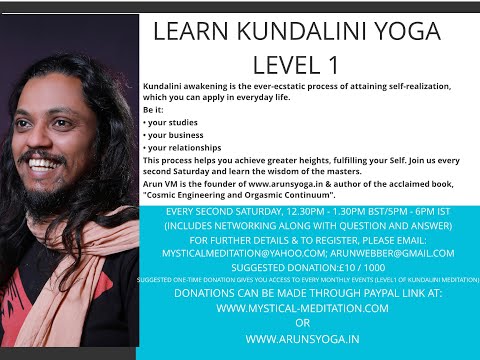
Online Kundalini Yoga Learning Session Level 1 For Beginners

Meeting Angels My Spiritual Awakening and the Journey Beyond

It is really difficult for my clients to achieve conscious breath work.









Leave a Reply