 ARUN'S YOGA
Exploring the Nature of Reality
In the philosophical discourse surrounding reality, a profound question arises: is your reality transcendent and immanent, or is it completely immanent or completely transcendental? If it is immanent, then one might argue that the very nature of transcendence is contradicted. Understanding these dimensions of reality requires a deep dive into the teachings of texts like the Vijñāna Bhairava Tantra.
The concept of transcendence refers to that which goes beyond ordinary limits, something that exists outside the possible experiences of the material world. On the other hand, immanence suggests that the divine pervades everything within the universe. If one views reality as completely immanent, the notion of transcendence appears to be undermined, leading to a significant philosophical conundrum.
Contrasting Immanence and Transcendence
To comprehend this relationship, one must first look at what immanence represents. Immanence implies that the divine or higher reality is present within the mundane experiences of life. In the teachings of the Vijñāna Bhairava Tantra, this is illustrated through the interconnectedness of all beings and the universe. The divine is not separate; it is within all of us, guiding and influencing our existence.
Conversely, transcendence is usually portrayed as the ultimate, ineffable reality that exists beyond our comprehension and is unreachable by common human experience. It is the state of being that transcends space and time, embodying qualities that are not bound by material limitations. The question arises: can these two perspectives coexist, or is one inevitably negated by the other?
The Nature of Reality in the Tantric Perspective
The Vijñāna Bhairava Tantra offers a unique perspective on this dichotomy. The text suggests that true understanding involves a synthesis of both immanence and transcendence. Reality can be viewed as a unified whole where the transcendent expresses itself through the imminent. This implies that even within the physical world, there lies a deeper reality, a divine essence that connects everything.
Furthermore, the idea of Shakti, or divine energy, plays a crucial role in this understanding. Shakti is perceived as the dynamic force that brings about creation, transformation, and preservation in the universe. It operates within the framework of both immanent and transcendent realities. When one recognizes the presence of Shakti in all things, transcendence becomes a quality that is interwoven with immanence.
Philosophical Implications
This philosophical exploration does not merely remain an abstract notion; it has profound implications for our understanding of existence and spirituality. When one realizes that immanence does not exclude transcendence, it paves the way for a holistic understanding of divinity. It invites one to see the sacred in the mundane while acknowledging the existence of a higher reality that cannot be fully comprehended.
Moreover, if reality is accepted as immanent, one must not dismiss the transcendent but embrace both as essential aspects of existence. This duality enriches spiritual practice and personal growth. It encourages individuals to seek the divine in their everyday lives while also contemplating the vast, unknowable aspects of existence.
Conclusion: Embracing Both Realities
In conclusion, the journey through the complexities of reality reveals that it is not an either-or proposition between transcendence and immanence. Instead, they are intertwined facets of the same truth. The Vijñāna Bhairava Tantra teaches that understanding this relationship can lead to deeper insights into the nature of existence, guiding one toward a more profound spiritual awakening.
Thus, as one contemplates these concepts, it becomes apparent that the essence of reality might blend the seen and the unseen, the known and the unknown, inviting seekers to explore both dimensions in their spiritual journey.
Frequently Asked Questions
What is the main focus of the article?
The article explores the relationship between transcendence and immanence in the context of reality, particularly through the lens of the Vijñāna Bhairava Tantra.
How does immanence relate to transcendence according to the article?
Immanence suggests that the divine is present within the universe, while transcendence refers to a reality that is beyond ordinary experience. The article posits that these two concepts can coexist.
What role does Shakti play in the understanding of reality?
Shakti, or divine energy, is seen as the dynamic force that connects immanence and transcendence, facilitating creation and transformation within the universe.
What does the Vijñāna Bhairava Tantra suggest about reality?
The text suggests that true understanding of reality involves synthesizing both immanence and transcendence, viewing them as interconnected rather than contradictory.
Test Your Knowledge and Win Coupons to Get Discounts
Have a correction or improvement to suggest?
Log in or create a free accountRelated Videos
 If u think then you are thinking about the thought.Not about the reality.
 To experience reality we need to change the pattern of thought. Please learn to unlearn.
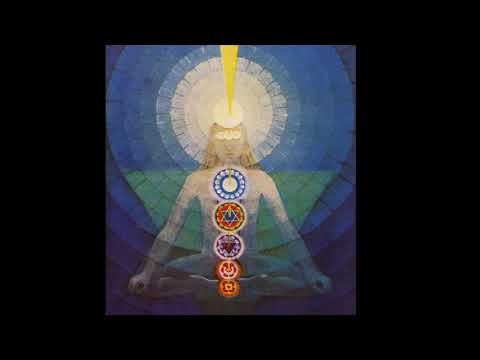 Kundalini Yoga - How It Helps Us To See Reality
 The ability to foresee comes from human transcendence.Happens when u integrate your shadow self.
 Sutra are the term denotes ultimate secretes related to nature of visible universe.
 I have spoken to people who are dying and this is what I saw. #death #spirits #reality #shorts
 metatrons cube the blueprint of reality
 Creating Mushroom Based Meat How One Passion Turned Vegan Dreams Into Reality 1









Leave a Reply