Introduction to Tantra Yoga
Tantra Yoga is a spiritual practice that originated in ancient India, as documented in various texts such as the ‘Kularnava Tantra’ and ‘Vijnana Bhairava’.
History and Philosophy of Tantra Yoga
The practice aims to balance and harmonize these energies within the individual, a concept rooted in the teachings of the ‘Shiva Sutras’ and ‘Tantra Shastra’.
Benefits of Tantra Yoga
Tantra Yoga offers numerous benefits for physical, mental, and emotional well-being, as outlined in texts like the ‘Hatha Yoga Pradipika’, which discusses the holistic advantages of yoga practices.
- Improved flexibility and strength
- Enhanced balance and coordination
- Reduced stress and anxiety
- Improved sleep quality
- Increased self-awareness and confidence
- Heightened sense of spirituality and connection to the universe
Getting Started with Tantra Yoga
To begin your Tantra Yoga journey, it is essential to find a qualified teacher or instructor who can guide you through the practices and principles of this ancient tradition. You can start by:
- Researching local yoga studios or online classes that offer Tantra Yoga
- Investing in a good quality yoga mat and props
- Setting aside a dedicated space for practice
- Committing to a regular practice schedule
Tantra Yoga Practices
Tantra Yoga involves a range of practices, including:
- Physical postures (asanas) to balance and align the body
- Breathwork (pranayama) to control and regulate the life force
- Meditation (dhyana) to quiet the mind and focus the awareness
- Energy healing techniques (such as Reiki or sound healing) to balance and harmonize the energy
- Chakra balancing and cleansing to align and purify the energy centers
Frequently Asked Questions
What is the primary focus of Tantra Yoga?
The primary focus of Tantra Yoga is to cultivate energy, awareness, and consciousness, and to balance the body, mind, and spirit.
Is Tantra Yoga suitable for beginners?
Yes, Tantra Yoga is suitable for beginners, but it is essential to find a qualified teacher or instructor to guide you through the practices and principles.
What are the benefits of practicing Tantra Yoga?
The benefits of practicing Tantra Yoga include improved flexibility and strength, enhanced balance and coordination, reduced stress and anxiety, and increased self-awareness and confidence.
Do I need any special equipment to practice Tantra Yoga?
You will need a good quality yoga mat and props, such as blocks, straps, and blankets, to support your practice.
Can I practice Tantra Yoga at home?
Yes, you can practice Tantra Yoga at home, but it is recommended to start with a qualified teacher or instructor to learn the proper techniques and principles.
Basic Tantric Breathing Exercise
One simple practice to start with is the ‘Nadi Shodhana’ or alternate nostril breathing. This technique helps to balance the energies of Shiva and Shakti. To practice, sit comfortably, close your right nostril with your thumb, inhale deeply through your left nostril, then close your left nostril with your ring finger and exhale through your right nostril. Repeat this pattern for several minutes.
Balancing Shiva and Shakti Energies
In Tantra Yoga, balancing the masculine (Shiva) and feminine (Shakti) energies is crucial for spiritual growth. This can be achieved through meditation, visualization, and specific asanas that align these energies. For instance, practicing ‘Baddha Konasana’ (Bound Angle Pose) can help open the hips and facilitate energy flow.
Test Your Knowledge and Win Coupons to Get Discounts
Have a correction or improvement to suggest?
Log in or create a free accountRelated Videos

Felicity feline sharing her experience with yoga. #meditation #tantra #yoga

Learn yoga with lyuba @arunsyoga.in

From NIT to IIM to Yoga:Trying to find sanity in insanity.

How Online Yoga Classes and Tutorials Can Transform Your Practice Anytime, Anywhere!

Learn yoga with dolly Nigam @arunsyoga4509

Vedic Reading Series Episode No.15: 'The Politics of Naked Yoga For Men'
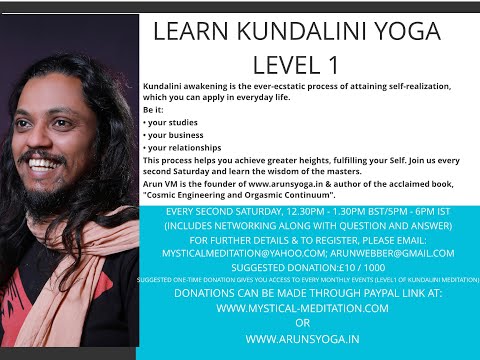
Online Kundalini Yoga Learning Session Level 1 For Beginners

Master Mind For Dummies 4:(Patanjali Yoga Sutra Chapter-1 Samadhipadam)









Leave a Reply