 ARUN'S YOGA
Direct Answer
The direct inner worship (प्रत्येक्यजनं) within the body is the meditative realization of the Supreme Reality that the Guru reveals. By knowing this Param Tattva, one instantly attains the highest state of liberation (परमश्नुते). Hence, Gautama is urged to listen briefly to this concise teaching.
Understanding the Verse
The verse 53 of the Brahmavidyā Upaniṣad presents a compact yet profound instruction. It begins with the declaration that the Guru, who is the source of liberation, unveils the supreme principle. The phrase परं तत्त्वं यज्ज्ञात्वा emphasizes that knowledge of the ultimate reality is the gateway to the ultimate attainment.
Who is the Guru?
In the Upaniṣadic tradition, the Guru is not merely a teacher but the embodiment of the divine consciousness that guides the disciple beyond the veil of ignorance. The Guru’s role is to point directly to the inner fire of pratyakshayajna, the self‑witnessing practice.
The Concept of Pratyakshayajna
Pratyakshayajna translates to “direct inner sacrifice.” It is an internal ritual that does not require external offerings. Instead, the practitioner offers the ego, thoughts, and sensory attachments to the flame of awareness.
- It is performed within the subtle body (संज्ञाशरीर).
- The sacrifice is the surrender of the sense‑objects to the witness consciousness.
- It culminates in the realization that the true self is beyond the body and mind.
How It Relates to the Body
The instruction देहे संक्षेपाच्छृणु (listen briefly within the body) indicates that the entire practice is an inner, bodily meditation. The practitioner visualizes the spine as a channel of light, the heart as the seat of compassion, and the breath as the carrier of the divine mantra.
Realizing the Supreme Reality (Param Tattva)
The Supreme Reality, or Param Tattva, is described in the Upaniṣads as the unchanging, all‑pervading consciousness. It is beyond names, forms, and dualities. Once the disciple internalizes this truth, the distinction between self and the universal dissolves.
Key characteristics of Param Tattva include:
- Immutability – it never changes.
- All‑pervasiveness – it exists in every atom.
- Non‑duality – there is no separation between knower and known.
When the disciple grasps these qualities, the phrase परमश्नुते (attains the highest) becomes a lived reality rather than a distant goal.
Practical Steps for Inner Worship
To implement the teaching of verse 53, one can follow a structured practice:
1. Preparation
Find a quiet space, sit with the spine erect, and take several deep breaths to calm the mind.
2. Focused Awareness
Direct attention to the breath moving in and out of the nostrils. As the breath settles, expand awareness to the subtle sensations throughout the body.
3. Invocation of the Guru
Mentally recite a short prayer honoring the Guru, acknowledging his role as the revealer of the Supreme Reality.
4. Visualization of Pratyakshayajna
Imagine a radiant flame at the base of the spine, rising upward with each inhalation, carrying away impurities. With each exhalation, visualize the flame merging with the heart’s light, symbolizing the offering of the ego.
5. Realization
When the flame reaches the crown, rest in the awareness that the flame and the observer are one. This moment is the direct experience of परं तत्त्वं.
6. Integration
Carry the sense of unity into daily activities. Every action becomes a silent offering, reinforcing the inner worship.
Conclusion
Verse 53 succinctly encapsulates the pathway from guru‑guided instruction to the experiential realization of the Supreme Reality through inner worship. By listening briefly to this concise teaching and practicing the steps of pratyakshayajna, the seeker transcends the limited self and attains the highest state of liberation. The Guru’s revelation is thus not a distant doctrine but a lived, breathing practice within the very body of the aspirant.
Frequently Asked Questions
What is pratyakshayajna?
It is the direct inner sacrifice where the practitioner offers the ego, thoughts, and sensory attachments to the flame of awareness within the subtle body.
How does the Guru help the disciple according to verse 53?
The Guru reveals the supreme reality (Param Tattva), enabling the disciple to attain the highest state of liberation.
What are the key characteristics of Param Tattva mentioned in the article?
It is immutable, all‑pervasive, and non‑dual, with no separation between knower and known.
What practical steps are suggested for performing the inner worship?
Preparation, focused breathing, invocation of the Guru, visualization of a radiant flame at the spine, realization of unity, and integration into daily life.
Test Your Knowledge and Win Coupons to Get Discounts
Have a correction or improvement to suggest?
Log in or create a free accountRelated Videos
 To experience pleasure we don't have to be in body consciousness.
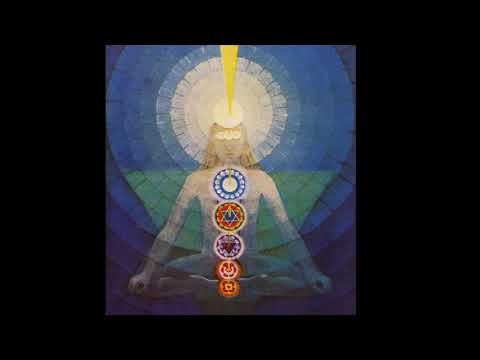 Kundalini Yoga - How It Helps Us To See Reality
 If u think then you are thinking about the thought.Not about the reality.
 To experience reality we need to change the pattern of thought. Please learn to unlearn.
 Guru Hamare Pyaaarr..
 I have spoken to people who are dying and this is what I saw. #death #spirits #reality #shorts
 I got #liberty to #direct my #roles -Kristina #shorts
 AI Avatar Unveils the Power of Tantrika Herbal Tea: 6 Vedic Herbs for Body, Mind & Spirit









Leave a Reply